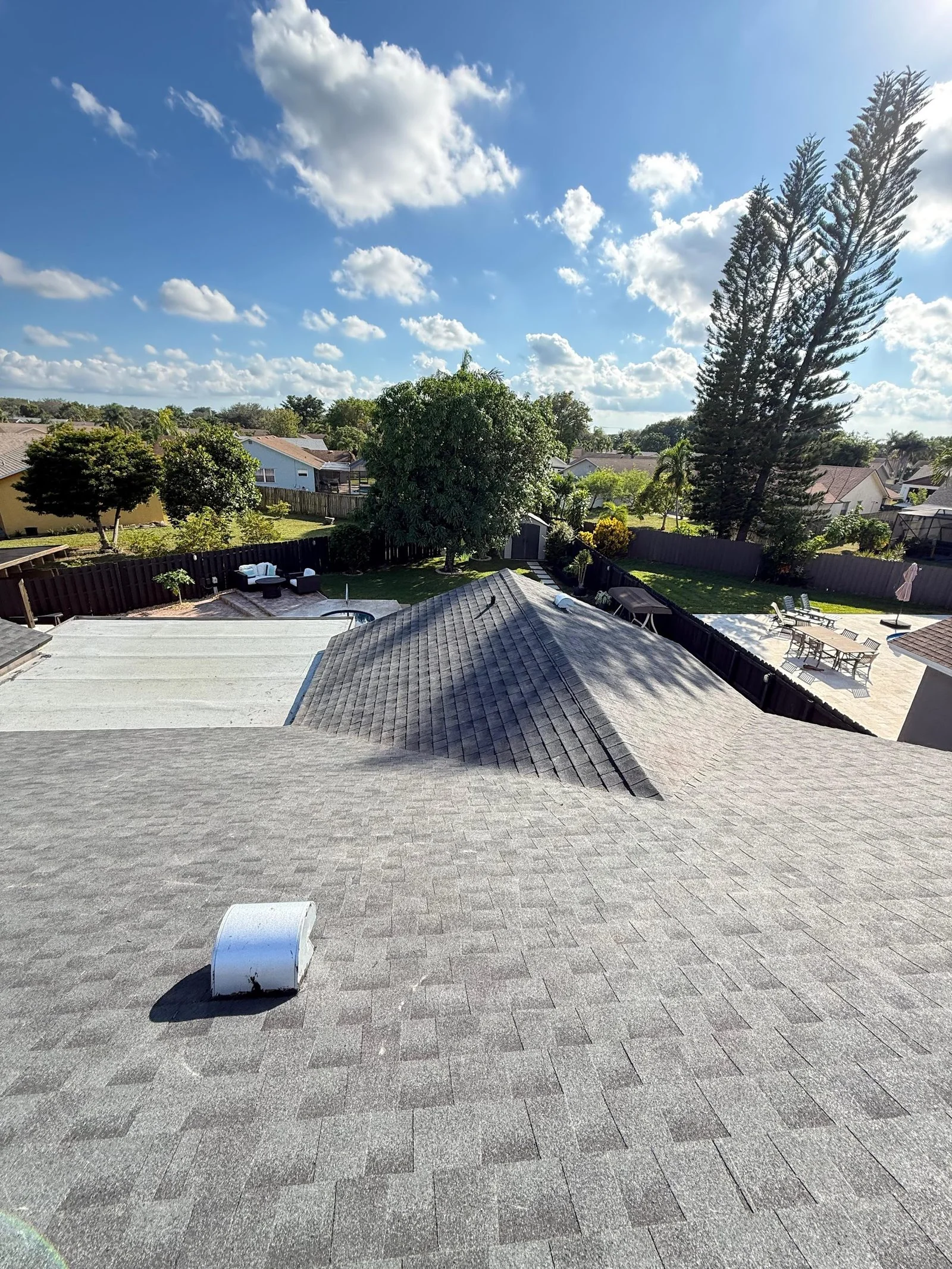
Roof maintenance in Florida is not optional if you want your roof to reach its rated lifespan. Between the intense UV exposure, tropical storms, high humidity, and year-round biological growth, a Florida roof without regular attention degrades significantly faster than the same product installed in a drier climate. This complete checklist covers everything Broward County homeowners should do each year to protect their investment.
We recommend completing this checklist twice a year: once in the spring before hurricane season begins, and once in the fall after the peak storm season ends. A pre-hurricane inspection gives you time to address any vulnerabilities before tropical systems arrive. A fall inspection catches any storm season damage before it progresses through the winter rain season.
1. Inspect the Roof Surface for Visible Damage
Use binoculars from the ground or hire a professional. Look for:
- Missing, lifted, cracked, or curling shingles
- Cracked, shifted, or missing roof tiles
- Bald patches or granule accumulation in gutters (asphalt shingles)
- Rust streaks on metal panels or fasteners
- Visible daylight through vents or ridge caps
2. Inspect All Flashing Points
Flashing at chimneys, skylights, vent pipes, valleys, and wall intersections is one of the most common failure points on Florida roofs. In coastal communities like Deerfield Beach, Pompano Beach, and Boca Raton, salt air accelerates corrosion of galvanized flashing. Check for:
- Separation between flashing and the roof surface
- Cracked or missing sealant at flashing joints
- Rust or corrosion on metal flashing components
- Lifted or bent flashing at drip edges
3. Clean Gutters and Downspouts
Clogged gutters in South Florida are particularly problematic because of the high frequency and intensity of rainfall. Water that cannot drain freely backs up against the fascia, saturates the roof edge, and creates a pathway for moisture into the attic. Palm fronds, seed pods, and Florida debris clog gutters faster than deciduous leaves in northern climates. Clean gutters at minimum twice a year and after any major storm event.
4. Clear Debris from the Roof Surface
Organic debris, including palm fronds, leaves, branches, and seed pods, holds moisture against the roof surface and accelerates biological growth and material degradation. Use a blower or soft-bristle broom to clear debris from valleys and flat areas. Do not use a pressure washer on shingle roofs, as it strips granules. For tile roofs, soft washing with appropriate cleaning solutions is the correct approach.
5. Treat Algae, Moss, and Lichen Growth
Florida roofs develop algae streaks (the familiar dark black or gray staining), moss in shaded areas, and lichen on tile surfaces faster than anywhere else in the country. These are not just cosmetic issues. Algae and moss retain moisture against the roof surface, and lichen physically bonds to tile and degrades the surface over time.
Zinc or copper strips installed at the ridge prevent algae growth by releasing trace metals during rainfall. Affected areas can be treated with approved algae-resistant cleaning products. Never pressure wash a shingle roof to remove algae. This is one of the most common causes of premature shingle failure we see on roof maintenance inspections in Broward County.
6. Inspect the Attic
A roof inspection is incomplete without looking from the inside. Access your attic and check for:
- Water stains or active moisture on the decking or rafters
- Daylight visible through the roof boards
- Adequate ventilation: ridge vents and soffit vents should be clear and unobstructed
- Evidence of pest intrusion through damaged soffits or fascia
- Insulation in contact with the decking, which traps moisture and accelerates rot
7. Check Soffits, Fascia, and Trim
The trim components around the roof edge protect the structural framing from weather. In Florida, wood fascia boards rot quickly when paint or caulk fails. Vinyl soffits can separate at seams after storm winds. Check for discoloration, soft spots, gaps, and signs of animal intrusion. Damaged soffits and fascia allow humidity directly into the attic and create nesting opportunities for wasps, rats, and squirrels.
8. Trim Overhanging Trees
Tree branches that overhang the roof deposit debris, abrade shingles during wind events, and create a highway for pests to access the roof edge. In hurricane-prone Broward County, an overhanging branch in a major storm becomes a projectile. Trim branches to maintain at least 6 feet of clearance from the roof surface. This one maintenance step prevents a surprising number of the roof repairs we perform each year.
9. Schedule a Professional Roof Inspection
A homeowner walkthrough is valuable, but a professional inspection catches what the untrained eye misses. A licensed roofer will walk the surface, probe suspect areas, examine flashing integration, and check the attic. In Florida, this inspection is especially important before hurricane season. Identifying and addressing minor vulnerabilities in April can prevent major failures in September.
Qualitech Roofing Services offers free annual inspections across all of Broward County, including Fort Lauderdale, Pompano Beach, Deerfield Beach, Hollywood, Coral Springs, and Boca Raton. Our inspection includes a written report with photos so you have documentation for insurance purposes.
Stay Ahead of Your Roof This Season
Regular roof maintenance in South Florida is the single most cost-effective way to extend your roof lifespan and avoid emergency repairs. Call Qualitech Roofing Services at (754) 326-9233 or schedule your free inspection online to get your roof checked before hurricane season arrives.
Qualitech Roofing Services
Schedule Your Annual Roof Inspection