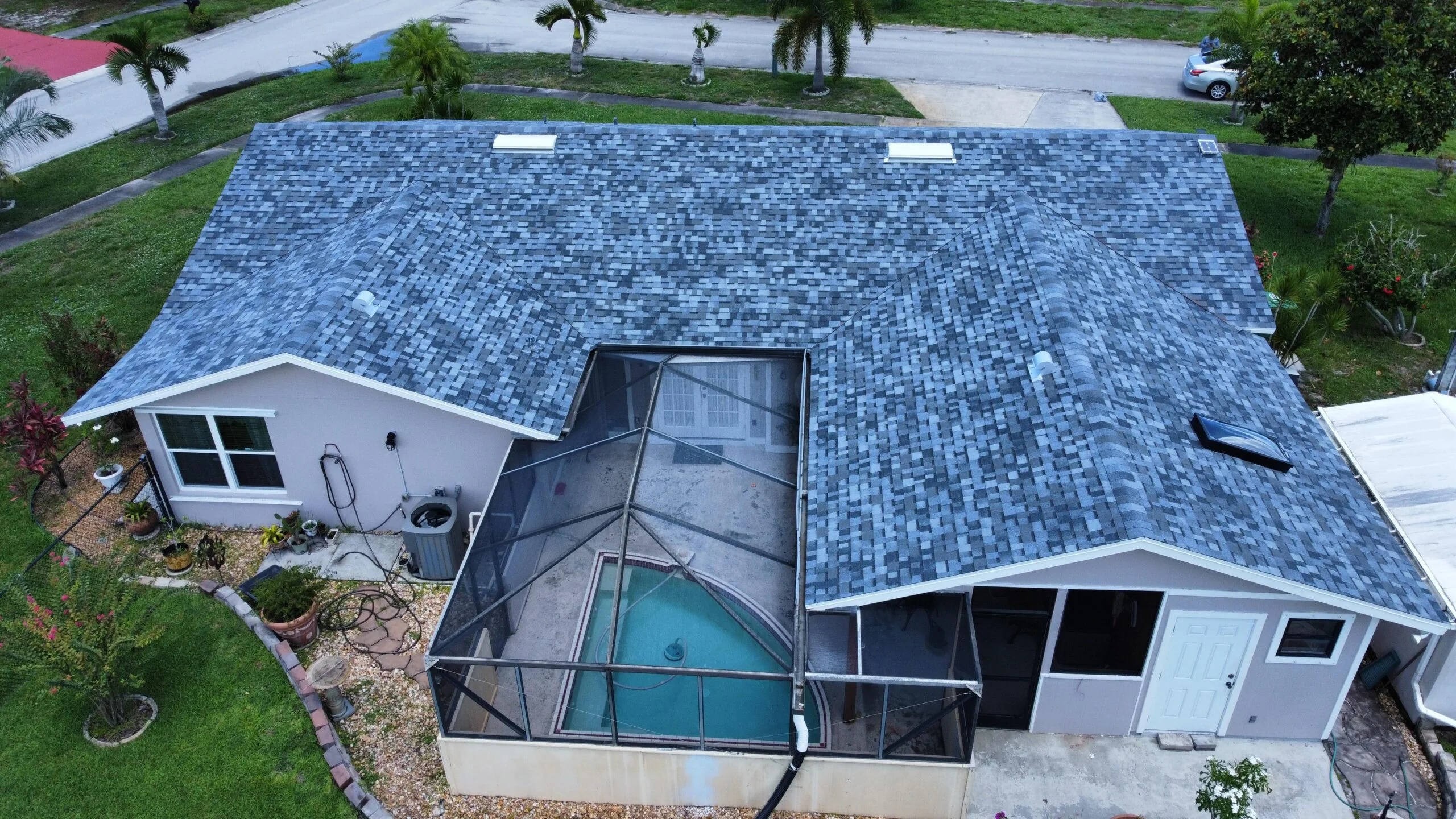
A storm has just passed through your neighborhood in Broward County. You see debris on the roof, water stains spreading across a ceiling, or shingles scattered across your yard. The next 24 hours matter more than most homeowners realize. Secondary water damage from a compromised roof can exceed the cost of the original storm damage if left unaddressed for even a few days in South Florida's heat and humidity.
This guide walks you through the exact steps to take, in order, after storm damage hits your roof in Fort Lauderdale, Pompano Beach, Deerfield Beach, Hollywood, or anywhere else in Broward County.
Step 1: Prioritize Safety Before Anything Else
Do not go on your roof after a storm, even if it appears safe from the ground. Wet roofing surfaces are extremely slippery, and structural integrity may be compromised in ways that are not visible. If a tree limb has fallen through the roof, do not attempt to remove it yourself. Downed power lines near the house mean you should stay inside or evacuate until the utility company clears the area.
Inside the home, check for the smell of gas. If you suspect a gas leak, leave immediately and call 911. Standing water inside the home may be in contact with electrical systems. Turn off power at the main breaker if water is near outlets, light fixtures, or the electrical panel.
Step 2: Document Everything Before Moving or Touching Anything
This step is essential for your insurance claim and cannot be undone once you start cleaning up. Use your phone to photograph and video:
- Every room where water damage is visible on ceilings, walls, or floors
- The exterior of the roof from every accessible angle around the home
- Any downed trees, branches, or debris on or near the roof
- Damaged gutters, fascia, soffits, or downspouts
- Any personal property inside the home that has been damaged by water
Turn on the timestamp feature on your camera if available. Send copies of all images and video to cloud storage (Google Photos, iCloud) immediately so they are backed up before your phone can be damaged. Insurance adjusters are trained to look for evidence that damage predated the storm. Your timestamped photos prove otherwise.
Step 3: Call Your Insurance Company Within 24 Hours
Florida law requires homeowners to report storm damage to their insurer promptly. Most policies have language requiring "timely notice" of loss. Waiting several days before calling, especially when the damage is visible and rain has continued to enter the home, can be used by the insurer to argue that you failed to mitigate the loss, potentially reducing or denying the claim.
When you call, have your policy number ready. Ask for a claim number and the name and direct contact information of the adjuster assigned to your case. Write everything down. Do not let the insurance company pressure you into accepting a settlement before a licensed contractor has completed their own independent assessment of the damage.
Step 4: Arrange Emergency Tarping to Stop Active Water Entry
If rain is continuing to enter the home through the damaged roof, temporary tarping can prevent thousands of dollars in secondary damage to ceilings, insulation, drywall, and flooring. A properly installed emergency tarp covers the damaged area and extends over the ridge and down the opposite side to prevent wind uplift from pulling it off.
This is work that should be done by a licensed roofing contractor, not a general handyman. An improperly installed tarp can be blown off by the next rain event or can trap moisture against the decking and accelerate mold growth. In Broward County, mold can begin forming inside a wet attic within 48 hours in summer conditions.
Qualitech Roofing Services provides emergency tarping for Broward County homeowners. Call us at (754) 326-9233 for same-day or next-day response during hurricane season.
Step 5: Beware of Storm Chasers
After every major storm event in South Florida, unlicensed contractors arrive from out of state and go door to door offering immediate repairs, sometimes the same day the storm clears. This is one of the most common sources of fraud targeting Florida homeowners following hurricanes and tropical storms.
Storm chasers frequently ask you to sign an Assignment of Benefits (AOB) form that transfers your insurance claim rights to the contractor. Once signed, they control your entire claim, can inflate costs aggressively, and may perform substandard work that fails within months. Florida has made AOB abuse illegal in many circumstances, but the practice continues in different forms.
Before authorizing any contractor to perform post-storm work:
- Ask for their Florida contractor license number and verify it at myfloridalicense.com
- Ask for a local business address and how long they have operated in Broward County
- Never sign an AOB or any contract before receiving a written estimate and reviewing it carefully
- Call your insurance company before authorizing non-emergency work
Step 6: Get an Independent Damage Assessment from a Licensed Local Contractor
Your insurance company will send their own adjuster. That adjuster works for the insurance company and is tasked with assessing the claim as efficiently as possible from their employer's perspective. Having an independent assessment from a licensed local contractor gives you a second data point and documentation that supports your claim independently.
At Qualitech Roofing Services, we provide free post-storm damage assessments for Broward County homeowners. We photograph every finding, provide a written report, and can give you a fair estimate for the work required. Our documentation has helped homeowners support insurance claims that were initially underpaid or disputed.
What to Expect From the Repair Timeline
Minor storm repairs, such as replacing a section of lifted shingles, resealing flashing, or replacing a few cracked tiles, can typically be completed within one to three business days once materials are confirmed. More significant repairs requiring partial re-decking, full section replacement, or structural work take longer, particularly if Broward County requires a permit for the scope of work involved.
After a major storm event, material supply chains tighten and contractor schedules fill quickly across the county. The sooner you contact a licensed local contractor, the better positioned you are to get the work scheduled before the next rain event causes additional damage.
Call Qualitech Now for Emergency Response
We are a licensed and insured roofing contractor based in Deerfield Beach, serving all of Broward County. We offer emergency tarping, free damage assessments, and written estimates for storm repair. Call (754) 326-9233 or schedule your inspection online. We respond within 2 hours during business hours, including during active storm season.
Qualitech Roofing Services
Emergency Roof Repair and Free Storm Damage Assessment