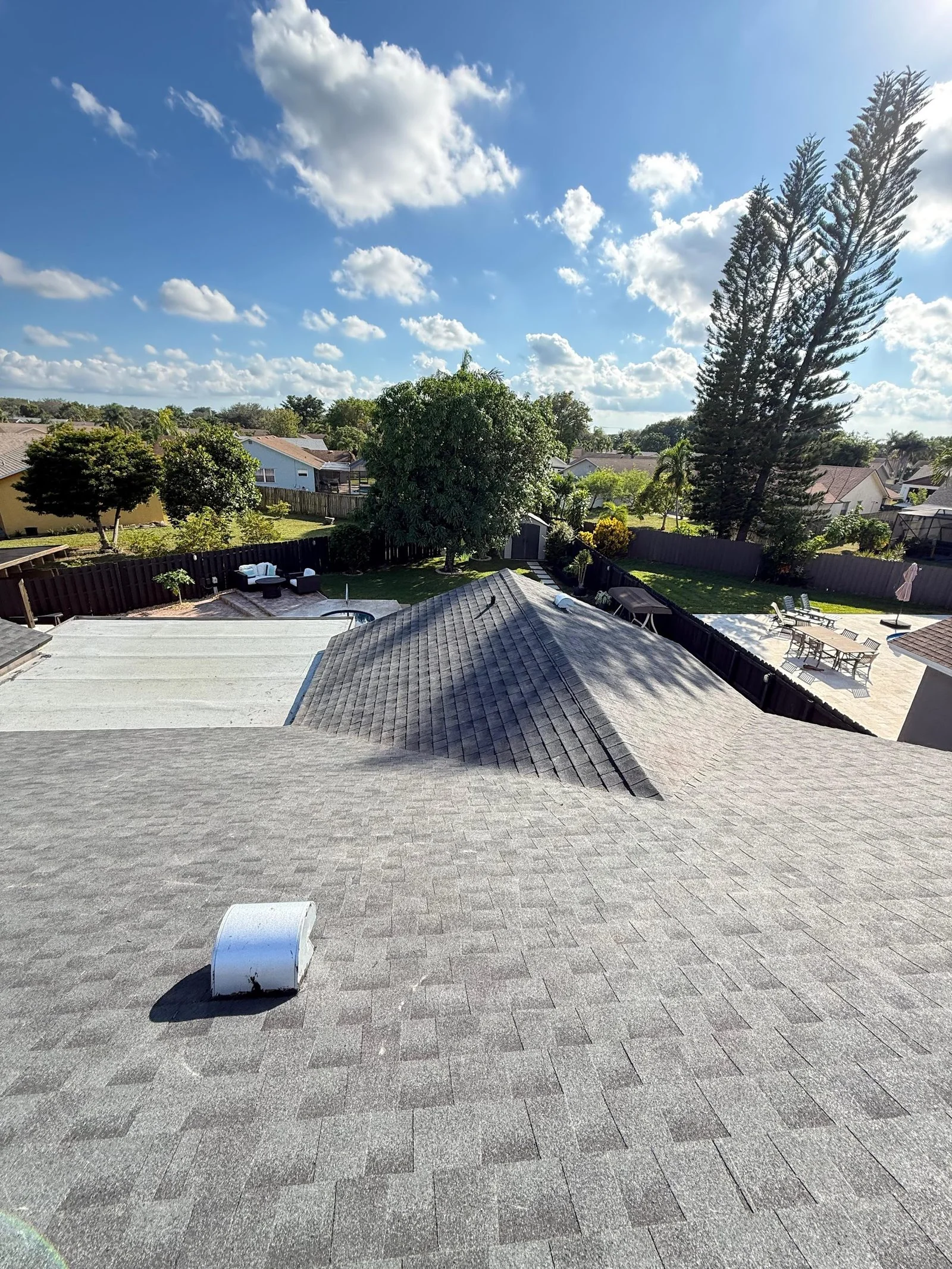
Hurricane season runs June 1 through November 30, and July marks the point when conditions in the Atlantic and Gulf of Mexico become most favorable for storm development. For homeowners in Broward County, Fort Lauderdale, Pompano Beach, and Deerfield Beach, the window to prepare your roof is narrowing fast.
At Qualitech Roofing Services, we inspect and repair roofs across Broward County every year before and after major storm events. This guide covers the steps that actually matter, in order of priority, so you can get ahead of the season instead of reacting to it.
Why July Is the Most Critical Month for Roof Prep
Most homeowners think preparation season is May or June. In reality, the peak of hurricane activity historically falls between mid-August and mid-October. July gives you a narrow but real window to schedule an inspection, address any existing weaknesses, and have the work completed before contractor schedules fill up after the first named storm of the season.
Once a major storm threatens South Florida, licensed roofing contractors book out within 48 hours for post-storm emergency repairs. Getting your inspection done now, while slots are still available, is the single most impactful thing you can do this month.
Step 1: Schedule a Professional Roof Inspection
A visual inspection from the ground is not enough. Damaged or deteriorated flashing, underlayment saturation, lifted nail heads, and compromised ridge caps are invisible from street level but create serious vulnerabilities in high winds. A licensed roofer walks the entire surface, checks inside the attic for signs of water infiltration, and photographs every issue found.
For Broward County homes, pay particular attention to:
- Flat or low-slope sections: Common on Florida homes built in the 1970s and 1980s, these areas are especially vulnerable to standing water and wind-driven rain penetration.
- Tile roofs: Cracked, slipped, or improperly set tiles become projectiles in Category 1 or higher winds. Individual tile condition matters as much as overall roof age.
- Soffit and fascia: Wind enters the attic through damaged soffits and creates upward pressure that can lift entire roof sections. This is one of the primary failure modes in Florida hurricane events.
- Flashing at all penetrations: Vent boots, skylight seals, and chimney flashing deteriorate faster in South Florida humidity. Storm-force rain will find every gap.
Step 2: Address Repairs Before Wind Arrives
Any issue found during inspection that you defer until "after season" is a risk you are consciously accepting. This is especially true for:
Missing or lifted shingles: Even a single lifted shingle exposes the underlayment to wind uplift. Replacing it takes about an hour. Repairing the water damage it causes after a storm takes weeks and costs far more.
Failing flashing around chimneys or skylights: Properly installed and sealed flashing can be the difference between a dry attic and a mold problem that develops over the 48 hours following a storm event.
Clogged gutters and downspouts: During a tropical storm, rainfall rates of two to four inches per hour are common. Blocked gutters overflow toward the foundation and can force water under the drip edge and into the fascia board. Clean them before hurricane season peaks.
Repairs that take an hour now can require a full roof replacement if a storm accelerates underlying damage. This is not an exaggeration. It is what our crews see every single hurricane season.
Step 3: Verify Your Roof Meets Current Florida Building Code
Florida adopted the High-Velocity Hurricane Zone (HVHZ) building code after Hurricane Andrew in 1992. Broward County is subject to this code, which requires specific nail patterns, secondary water barriers, and uplift-rated fasteners on all new roofing work. Older roofs installed before 2002 may not meet current standards.
This matters beyond safety. Many Florida homeowners' insurance policies now require proof that the roof was installed to current HVHZ standards or they will reduce coverage or decline to renew. A roof replacement done to current code also triggers a wind mitigation credit that can reduce your annual insurance premium significantly.
Step 4: Document Your Roof's Current Condition
Before hurricane season advances, photograph your roof from every accessible angle and store those images in cloud storage. If a storm causes damage, insurers require proof that the damage was storm-related and not pre-existing. Homeowners without pre-storm photos frequently face claim disputes that take months to resolve. Your photos are the baseline that protects your claim.
If you have had a professional inspection, request a written report with photos from your contractor. This documentation is more credible to an adjuster than personal cell phone photos taken after a storm.
Step 5: Review Your Homeowner's Insurance Policy Now
Review your declarations page before a named storm forms. Confirm your dwelling coverage limit reflects the actual replacement cost of your roof. Many Broward County homeowners have not updated their coverage limits since 2018 or 2019, and construction costs have increased substantially. A roof that cost $18,000 to replace in 2019 may cost $26,000 or more today. If your coverage cap is below current replacement cost, you pay the difference out of pocket.
Also note your hurricane deductible. Florida policies typically have a separate hurricane deductible expressed as a percentage of your insured value, not a flat dollar amount. A 2% deductible on a $400,000 home is an $8,000 out-of-pocket cost before insurance pays anything. Know this number before the storm, not after.
How Long Does Pre-Storm Roof Prep Take?
A professional inspection for a standard Broward County home takes one to two hours. Minor repairs such as re-nailing lifted shingles, replacing a few cracked tiles, or resealing flashing are often completed the same day or within a few days. If structural repairs or partial re-roofing are needed, lead times are currently running five to ten business days for materials depending on your roof type. The closer we get to peak season, the longer those lead times become as demand increases.
Get a Pre-Hurricane Inspection This Week
Qualitech Roofing Services offers free pre-hurricane inspections for Broward County homeowners. Our licensed crew will walk your entire roof, photograph every finding, and give you a straight answer about what needs to be done before season peaks. We are not going to recommend work that is not necessary, and we will tell you clearly if your roof is in good shape.
Call us now at (754) 326-9233 or schedule your free inspection online. Slots are filling quickly as we move into the most active part of the 2026 hurricane season.
Qualitech Roofing Services
Free Pre-Hurricane Roof Inspection Available Now